
So it turns out that writing a blog on how to build a B2B brand strategy is not easy to fit into a single post, and I’m now officially convinced it’s time to write a full guide on the topic. But for now, I’ll stick to fitting the greatest hits into a two-part series until my magnum opus on brand strategy comes out.
In part one of this series, I covered the importance of establishing your brand purpose, mission, values, audience, and positioning. These steps are a perfect lead-in to part two on the topic, which takes all the planning and details defined in part one and puts them into action.
Where we left off, the foundations of building a B2B brand strategy had been laid. Now we’ll dig into how to that groundwork will help bring your brand to life.
4. Develop your Brand Identity
When people think of Nike, two things immediately come to mind: the swoosh logo and the tag line, “Just do it”. These two timeless brand symbols tell us nothing about the brand, yet they are forever associated with it. This is why brand identity is so often mistaken for the entirety of a brand strategy: because it can leave a lasting impression that is permanently tied to your brand. But there is so much more to brand identity than a logo and a tagline – especially when it comes to B2B businesses that are selling the complexity of a product, service, or solution to a collection of decision makers.
When it comes to B2B branding, there are layers to developing a brand identity that must be cohesively woven together in order to be successful. Building a consistent brand identity is what helps differentiate your brand in a crowded marketplace, and establishes brand recognition and loyalty. 90% of consumers say they expect their interactions with brands to be consistent across all channels, so investing time in this step is essential and should include the following components.
“There is so much more to brand identity than a logo and a tagline – especially when it comes to B2B businesses that are selling the complexity of a product, solution, or service to a collection of decision makers.”
Messaging
Your brand message is the underlying narrative used to communicate your brand’s differentiators, personality, and value proposition to your audience, and plays a central role in shaping your brand identity. Think of it as the bridge that connects your brand to your audience, establishing a connection with potential customers while motivating them to better understand and ultimately see the need or desire for your brand.
By developing a brand message framework, you can ensure consistency and alignment across all teams – from PR to HR to sales – when it comes to communicating about your business. A solid message framework includes:
- Target audience & personas
- Value proposition and brand promise
- Positioning & mission statements
- Include 25 word / 50 word / 100 word versions of your positioning statement
- Elevator pitch & boiler plate
- Overview of brand voice/personality
Brand voice
Your brand voice is the distinct tone and personality that your brand takes on when it communicates with your audience. For example, the Dove brand is recognized for its empowering and inclusive tone, while Apple is known for its concise and confident messaging: “Think different”. The value of having a clear, consistent brand voice can’t be stressed enough, as it establishes brand recognition and trust.
“Most people will get to know you through your communications: things like your website, emails and blog posts,” explains brand strategist Ellen Arnold Bryant. “And if these sound different from each other, they won’t know what to think of you — they won’t be able to kick off that all-important know, like and trust process.”
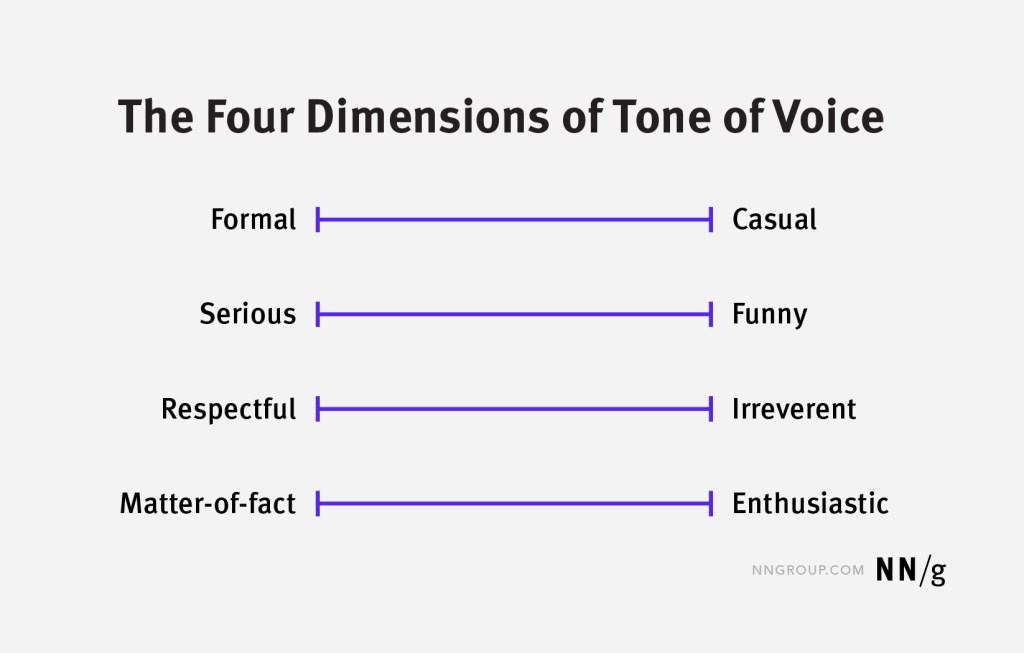
Establishing your brand’s tone of voice will not only help to maintain consistency, it will also aid in conveying its personality. How you choose to communicate your brand’s personality will come down to how you want your audience to perceive your message. The Nielsen Norman Group‘s map below of the four dimensions of tone of voice offers a helpful jumping off point:
Visual identity
Your brand’s visual identity are the visual elements that represent and differentiate your brand, including:
- Logo
- Brand colors
- Typography
- Imagery/graphics/iconography
- Brand guidelines
While we can all agree on the importance of visual identity in branding, this phase shouldn’t be touched until all the preceding steps have been completed. Visual identity is your brand’s chance to make a first impression, so without the previous details to help define your brand, your visual identity is an empty representation.
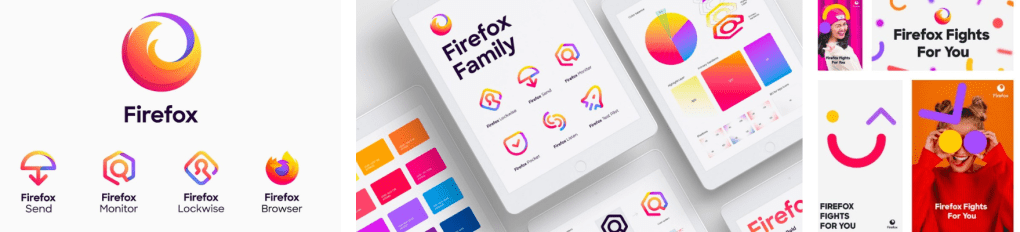
When Firefox rebranded in 2019, they did so with the intention of appealing to younger generations, which is reflected in the updates to their brand identity (as seen in the images above). They incorporated value-driven messaging, bright colors, youthful imagery, and playful iconography to align with their new brand identity.
Your brand messaging, voice, and identity should align and be cohesively delivered across all channels. If your intended brand identity is bold, go bold. If it’s clean and crisp, go, well, you get the idea.
5. Implement your Brand Strategy
The last step in building your brand strategy is to transform your efforts into action. Before you execute this step, it’s imperative that you socialize your brand strategy with all internal stakeholders to ensure that everyone is aware and on board with the plan. Here are a few tips on how to do this:
- Create brand assets that embody the key components of your brand strategy and identity, that adhere to your newly developed brand guidelines. This includes:
- *Website
- Marketing collateral (including content, event signage, swag, etc.)
- Update any old assets that are still in circulation with new branding.
- Social media profiles
- Any other channels your audience engages with.
- Plan a training session and/or internal launch party to walk through your brand strategy.
- This is a chance to create buzz and excitement with your internal team! These are, in one way or another, your brand ambassadors, and should be fully looped into your brand strategy ahead of its launch. Hand out newly branded swag, get branded treats – have fun with it!
- Prepare reference materials including your messaging, visual identity, and brand guidelines. Drop these into an easy-to-access folder for your team to access when needed.

*Building a website is a large, multifaceted project that can take months to execute. You’ll need to factor in time for developing your site map, content, SEO, graphics, integrations, revisions (and revisions, and more revisions depending on who your stakeholders are), and testing. Give yourself at least a 4-6 month timeframe to go live.
Once your internal team is informed and on board, it’s time to launch your new brand strategy! In addition to an internal launch, tactics for a brand launch include:
- PR launch: press release, earned media, launch event
- Omni-channel marketing campaign: email announcement, paid and social media, blog announcement
- Partner and influencer marketing/participation
Analyze and Optimize
So, your brand strategy is now live and roaring! But that’s not to say the job is done. From here, ongoing review and evaluation of how your strategy is performing is necessary to ensure the success you set out to achieve. By employing resources such as Google Analytics, business intelligence and ABM platforms (if applicable), you can measure the performance of your strategy against your launch goals, then optimize based on those findings.
“Ongoing review and evaluation of how your strategy is performing is necessary to ensure that you’re seeing the success you set out to achieve.”
Conclusion
Well, this sure has turned into a novel! If you made it this far, I think you’ll agree: building a brand strategy is an all-hands-on-deck project that involves a variety of stakeholder participation and buy-in. While this blog series aims to encapsulate the key steps required for successfully building your B2B brand strategy, each step requires dedicated time, research, and revision in order to optimize your strategy and ensure that it evolves with the growth of your brand and industry.
Are you as excited to read my future, as-yet-untitled guide on brand strategy as I am to write it? Subscribe to my blog and you’ll be the first to know when it comes out!
Are you looking to build a brand strategy for your business? Let’s discuss how I can help. With over a decade of experience in brand strategy and rebrands, I’d love to see how I can lend my expertise to help you deliver an impactful, long-lasting brand to help grow your business.
 Marcela Ricci